We welcome our newest postdoctoral research fellow, Enoch Yeung, MBBS (Cardiac Anesthesiology resident, Hong Kong)!
Author: admin
Poster presentation at the 9th Annual Maryland Stem Cell Research Symposium
Congratulations to Isaree for her poster presentation at the 9th Annual Maryland Stem Cell Research Symposium (Oct 25, 2017) at the Hilton Baltimore!
ADIPOSE-DERIVED STEM CELLS IMPROVE CARDIAC SPHEROID VIABILITY BY ANGIOGENESIS
Isaree Pitaktong1,2, Chin Siang Ong, MBBS1,3, Huaitao Zhang, BS1, Takuma Fukunishi, MD1, Chen Yu Huang, PhD3,
Cecillia Lui MD1, Narutoshi Hibino, MD, PhD1
1Division of Cardiac Surgery, Johns Hopkins Hospital, Baltimore, Maryland;
2Department of Biomedical Engineering, Johns Hopkins University, Baltimore, MD, USA; 3Division of Cardiology,
Johns Hopkins Hospital, Baltimore, Maryland, USA
http://www.mscrf.org/content/events/documents/2017Abstractbookfinal.pdf
Hibino Lab Podium Presentations at the Congenital Heart Surgeons’ Society Annual Meeting 2017
Congratulations to Dr. Chin Siang Ong and Sarah Chen for their podium presentations at the Congenital Heart Surgeons’ Society Annual Meeting 2017 in Chicago, IL (Oct 22-23, 2017)!
http://meeting.chss.org/abstracts/2017-program.cgi
A3. Improvement of Electrophysiological and Morphological Characteristics of 3D Bioprinted Human Induced Pluripotent Stem Cell-Derived Cardiac Patches by Defined Factors*
Chin Siang Ong1,2, Takuma Fukunishi1, Huaitao Zhang1, Chen Yu Huang2, Adriana Blazeski3, Deborah DiSilvestre2, Luca Vricella1, Leslie Tung3, Gordon Tomaselli2, Narutoshi Hibino1*
1Division of Cardiac Surgery, Johns Hopkins Hospital, Baltimore, Maryland, USA, 2Division of Cardiology, Johns Hopkins Hospital, Baltimore, Maryland, USA, 3Department of Biomedical Engineering, Johns Hopkins University, Baltimore, MD, USA
A5. Designing Customized 3D Printed Models For Surgical Planning in Repair of Congenital Heart Defects
Sarah Chen1, Juan Garcia1, Luca Vricella2, Narutoshi Hibino2
1Johns Hopkins School of Medicine, Baltimore, MD, USA, 2Johns Hopkins Hospital, Baltimore, MD
New publication: 3D bioprinting using stem cells.
Now on Pediatric Research (Nature Publishing Group)’s website!


Pediatr Res. 2017 Oct 6. doi: 10.1038/pr.2017.252. [Epub ahead of print]
3D bioprinting using stem cells.
Author information
Abstract
Recent advances have allowed for three-dimensional (3D) printing technologies to be applied to biocompatible materials, cells and supporting components, creating a field of 3D bioprinting that holds great promise for artificial organ printing and regenerative medicine. At the same time, stem cells, such as human induced pluripotent stem cells, have driven a paradigm shift in tissue regeneration and the modeling of human disease, and represent an unlimited cell source for tissue regeneration and the study of human disease. The ability to reprogram patient-specific cells holds the promise of an enhanced understanding of disease mechanisms and phenotypic variability. 3D bioprinting has been successfully performed using multiple stem cell types of different lineages and potency. The type of 3D bioprinting employed ranged from microextrusion bioprinting, inkjet bioprinting, laser-assisted bioprinting, to newer technologies such as scaffold-free spheroid-based bioprinting. This review discusses the current advances, applications, limitations and future of 3D bioprinting using stem cells, by organ systems.Pediatric Research accepted article preview online, 06 October 2017. doi:10.1038/pr.2017.252.
- PMID: 28985202
- DOI:10.1038/pr.2017.252
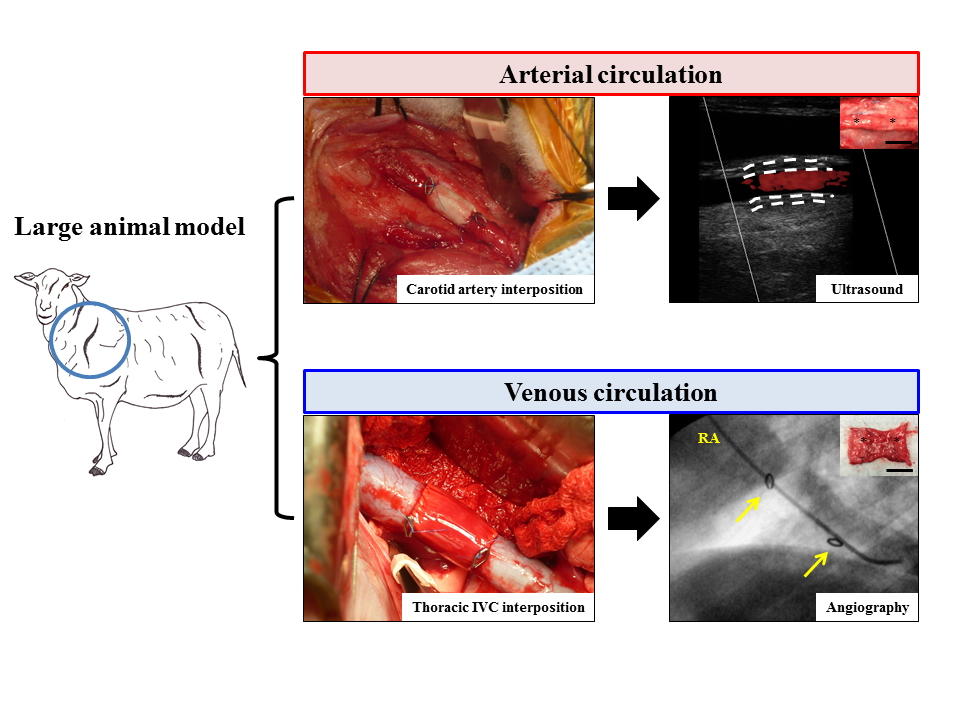
New Publication: Review of Vascular Graft Studies in Large Animal Models.
Tissue Eng Part B Rev. 2017 Oct 5. doi: 10.1089/ten.TEB.2017.0350. [Epub ahead of print]
Review of Vascular Graft Studies in Large Animal Models.
Abstract
As the incidence of cardiovascular disease continues to climb worldwide, there is a corresponding increase in demand for surgical interventions involving vascular grafts. The current gold standard for vascular grafts is autologous vessels, an option often excluded due to disease circumstances. As a result, many patients must resort to prosthetic options. While widely available, prosthetic grafts have been demonstrated to have inferior patency rates compared to autologous grafts due to inflammation and thrombosis. In an attempt to overcome these limitations, many different materials for constructing vascular grafts, from modified synthetic non-degradable polymers to biodegradable polymers, have been explored, many of which have entered the translational stage of research. This article reviews these materials in the context of large animal models, providing an outlook on the preclinical potential of novel biomaterials as well as the future direction of vascular graft research.
- PMID:28978267
- DOI:10.1089/ten.TEB.2017.0350
 Blog
Blog 