Left heart decompression in patients supported with extracorporeal membrane oxygenation for cardiac disease.
Author information
- 1. Division of Cardiac Surgery, Johns Hopkins Hospital, Baltimore, MD, USA.
Chin Siang Ong1, Yue-Hin Loke2, Justin Opfermann2, Laura Olivieri2, Luca Vricella1, Axel Krieger3, Narutoshi Hibino1.
1. Division of Cardiac Surgery, Johns Hopkins Hospital, Baltimore, MD, USA
2. Division of Cardiology, Children’s National Health System, Washington DC, USA
3. Sheikh Zayed Institute for Pediatric Surgical Innovation, Children’s National Health System, Washington DC, USA
Journal: World Journal for Pediatric and Congenital Heart Surgery

We describe the use of veno-arterial extracorporeal membrane oxygenation (ECMO) in a 35-year-old female with severe fixed pulmonary hypertension who went into cardiogenic shock during a Cesarean section. Pregnancy in the presence of severe pulmonary hypertension is typically contraindicated due to high maternal mortality rates. This patient visited our hospital at 37 weeks of gestation after experiencing dyspnea and chest pain. Clinical evaluation revealed severe fixed pulmonary hypertension. At the time of the planned delivery, femoral lines were placed; in case of emergency, ECMO became necessary during the delivery. During delivery, the patient developed sudden hemodynamic collapse necessitating rapid cannulation and initiation of ECMO. She was stabilized pharmacologically and separated from ECMO after 2 days. The baby was delivered uneventfully, and the mother and child were discharged 1 month after delivery.
Cesarean section; ECMO; Pulmonary hypertension
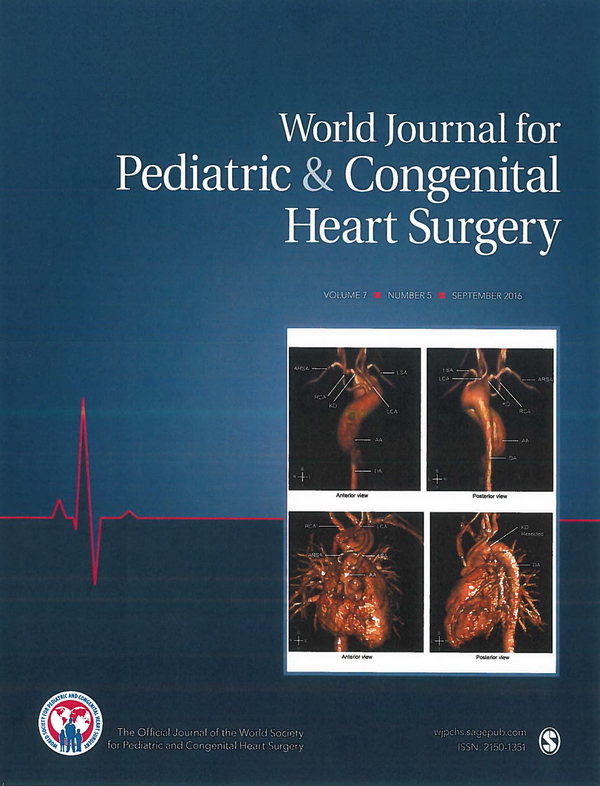
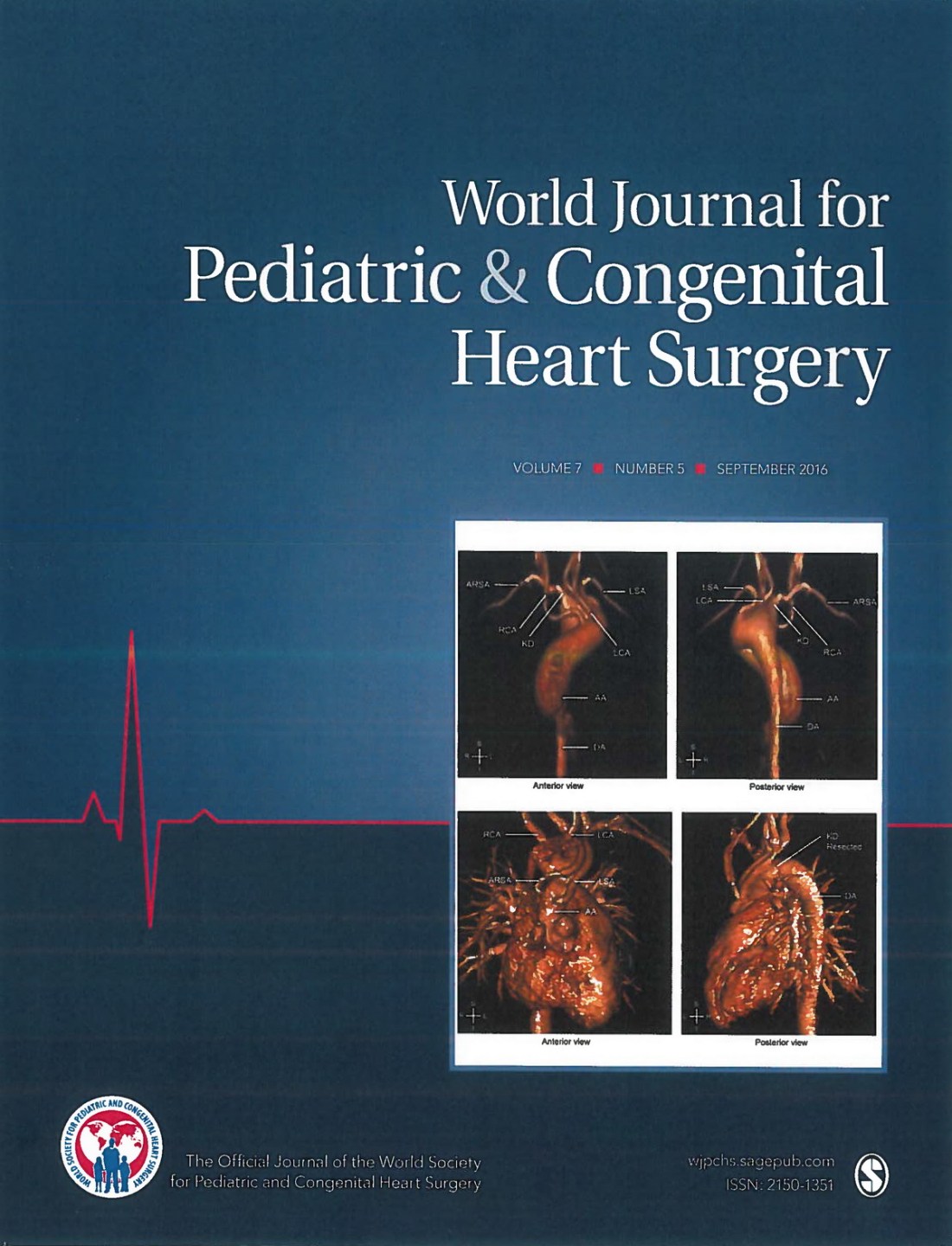
Loeys-Dietz syndrome (LDS) is an autosomal dominant genetic connective tissue disorder associated with aortic aneurysmal disease. Kommerell diverticulum (KD) is a rare aortic diverticulum, for which the indication for surgery and the surgical techniques remain subjects of debate. We describe our experience with a successful total aortic arch replacement including KD resection through a median sternotomy for a pediatric patient with LDS.
© The Author(s) 2016.
Kommerell diverticulum; Loeys-Dietz syndrome; aberrant right subclavian artery; congenital heart disease
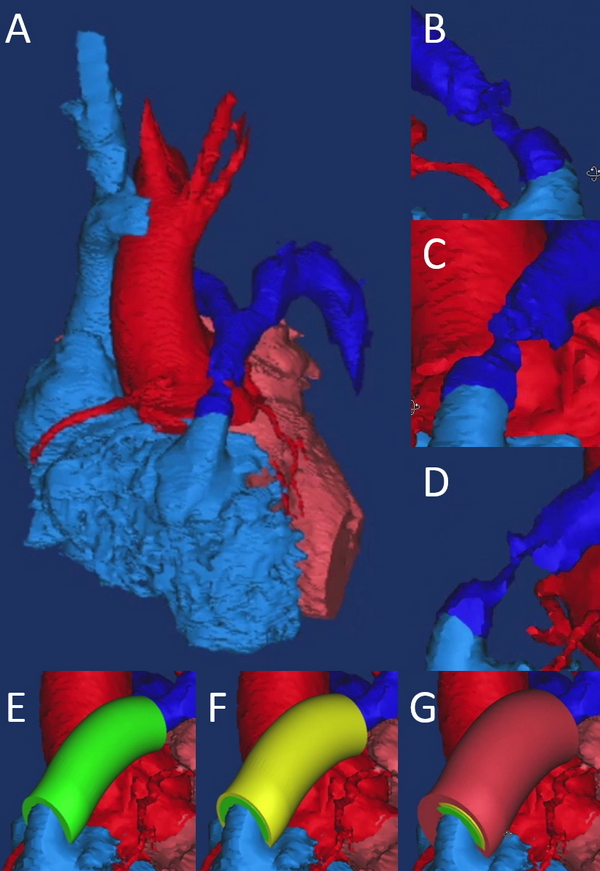
Tissue engineered vascular grafts (TEVGs) have the potential to overcome the issues faced by existing small diameter prosthetic grafts by providing a biodegradable scaffold where the patient’s own cells can engraft and form functional neotissue. However, applying classical approaches to create arterial TEVGs using slow degrading materials with supraphysiological mechanical properties, typically results in limited host cell infiltration, poor remodeling, stenosis, and calcification. The purpose of this study is to evaluate the feasibility of novel small diameter arterial TEVGs created using fast degrading material. A 1.0mm and 5.0mm diameter TEVGs were fabricated with electrospun polycaprolactone (PCL) and chitosan (CS) blend nanofibers. The 1.0mm TEVGs were implanted in mice (n = 3) as an unseeded infrarenal abdominal aorta interposition conduit., The 5.0mm TEVGs were implanted in sheep (n = 6) as an unseeded carotid artery (CA) interposition conduit. Mice were followed with ultrasound and sacrificed at 6 months. All 1.0mm TEVGs remained patent without evidence of thrombosis or aneurysm formation. Based on small animal outcomes, sheep were followed with ultrasound and sacrificed at 6 months for histological and mechanical analysis. There was no aneurysm formation or calcification in the TEVGs. 4 out of 6 grafts (67%) were patent. After 6 months in vivo, 9.1 ± 5.4% remained of the original scaffold. Histological analysis of patent grafts demonstrated deposition of extracellular matrix constituents including elastin and collagen production, as well as endothelialization and organized contractile smooth muscle cells, similar to that of native CA. The mechanical properties of TEVGs were comparable to native CA. There was a significant positive correlation between TEVG wall thickness and CD68+ macrophage infiltration into the scaffold (R2 = 0.95, p = 0.001). The fast degradation of CS in our novel TEVG promoted excellent cellular infiltration and neotissue formation without calcification or aneurysm. Modulating host macrophage infiltration into the scaffold is a key to reducing excessive neotissue formation and stenosis.